Curious which glass option will best protect your home when a storm hits?
You face a clear choice: pick units built to stop flying debris and high winds, or choose a simpler set that saves upfront cost but offers less storm defense. This guide will help you weigh safety, energy savings, and installation costs so you can make a confident call.
Published guidance from the Impact Windows Center on March 24, 2024 stresses that your budget, climate, and security needs must shape your decision. Proper setup matters; even the best product fails with poor installation.
Beyond storm resistance, look at long-term energy efficiency and potential savings. Triple pane windows sit at the top for both protection and efficiency, though they demand a bigger initial investment.
Key Takeaways
- Match your choice to local storm risk and budget.
- Products designed for hurricanes protect against debris and wind.
- Energy efficiency affects long-term savings and comfort.
- Installation quality is as important as the product you buy.
- Triple pane options offer top protection but cost more up front.
Understanding the Basics of Home Window Technology
Before you replace or upgrade, learn how glass and frames work together. Start with simple definitions so you can spot important differences when shopping.
Defining Standard Glazing
Defining Standard Glazing
Annealed glass is common in older units. It breaks into large, sharp shards and lacks the strength of newer options.
Tempered glass, by contrast, is heated and cooled fast so it shatters into small, less dangerous pieces. You often see tempered material in shower doors and some oven doors.
The Evolution of Window Panes
Insulated glass units add a sealed pocket of air or an inert gas between two panes. This reduces heat transfer and improves insulation.
- Multi-layered glass lowers noise and boosts thermal performance.
- Some units use argon gas for better resistance to heat flow.
- High-quality glass and correct installation preserve long-term durability and comfort in your home.
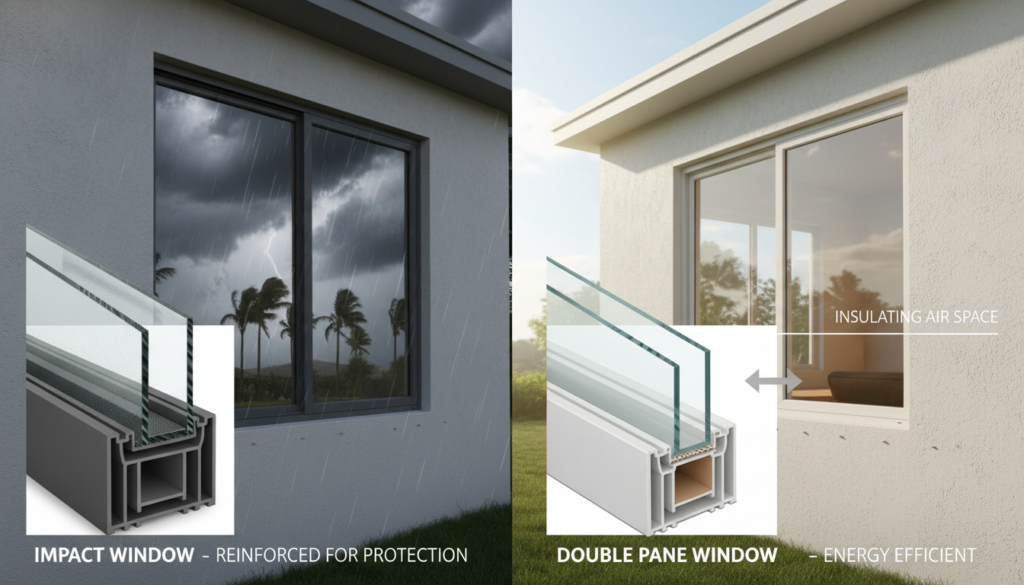
Impact Windows vs Double Pane Windows What Is the Difference
Choosing between reinforced glazing and sealed insulated units comes down to how much protection and efficiency you need.
Double-pane options give you a solid blend of cost and safety. They cut noise and reduce heat transfer compared with single-glazed glass, so many homeowners choose them for everyday performance.
Triple-pane units raise both protection and energy savings, but they cost more and often need professional installation. If hurricanes or heavy debris are common, that extra layer can matter.
Construction is the key difference. Models built for severe weather use laminated layers that hold together on impact. That leads to better security and less shattering during a storm.
- Pane count affects resistance to flying debris and noise reduction.
- Many modern designs fit existing openings, easing installation into doors or frames.
- Evaluate local storm risk, long-term energy savings, and upfront cost before you decide.
| Feature | Sealed Insulated Units | Laminated Safety Models |
|---|---|---|
| Typical cost | Moderate | Higher |
| Noise reduction | Good | Very good |
| Storm resistance | Limited | High |
| Installation | Often DIY-friendly | Usually requires pros |
| Energy efficiency | Improved | Best (especially triple pane) |
The Role of Laminated Glass in Storm Protection
Laminated glazing gives your home a much better chance of staying sealed during severe weather.
How laminated layers prevent shattering
Laminated glass is made by sandwiching a thin sheet of polyvinyl butyral (PVB) between two panes of glass.
The PVB acts like a glue, so if the outer pane breaks, the shards stick to the film instead of flying into your room.
That design helps resist flying debris during a hurricane, when winds can exceed 156 mph in a Category 5 storm.
Even cracked glass stays largely intact, which keeps wind and water from rushing through your doors and into the interior.
- Built to withstand high winds: these units keep the structure sealed even on extreme gusts.
- Improved insulation and energy savings: multiple layers reduce heat transfer and boost comfort.
- Added safety: inner layers prevent dangerous shards from entering your home after breakage.
Energy Efficiency and Thermal Performance
How a window manages heat flow shapes comfort, HVAC load, and long-term savings for your house.
Insulating Gas Benefits
Argon fills between glass panes act as a slow conductor of heat. That buffer reduces how quickly warm or cool air moves through each unit.
This keeps indoor temperatures more stable and lowers demand on your heating and cooling system.
Reducing Heat Transfer
Adding an extra sealed layer cuts conductive and convective losses. Triple pane units deliver the best reduction, thanks to two sealed cavities and thicker glass.
Proper installation seals those cavities so the gas stays trapped and performance holds over time.
Long Term Energy Savings
Upgrading can shrink monthly utility bills as your system runs less to maintain comfort.
Over years, better insulation increases home value and reduces your carbon footprint.
“Choose quality glazing and careful installation to turn a glass upgrade into lasting energy savings.”
- Improves comfort and reduces hot or cold spots.
- Lowers HVAC run time and monthly costs.
- Triple pane windows give the highest overall efficiency.
Curious about how these products perform in storms? See research about whether such units can break during a hurricane or for more context.
Security Benefits Beyond Hurricane Resistance
Security benefits extend past hurricane season and affect daily safety and comfort.
Laminated insulating glass offers real protection against forced entry. When someone strikes a pane, the layers hold together so the opening stays sealed. That makes it much harder for intruders to break through your doors or window frames.
You also get extra perks: this glass blocks harmful UV rays that fade furniture and rugs. The added mass and films reduce outside noise, creating a quieter, more peaceful interior.
Triple pane options raise security and insulation further. The extra layer and reinforced frame resist strikes and cut heat transfer, improving both safety and energy efficiency.
- Deterrent to break-ins: shards stay in place, slowing forced entry.
- UV protection: preserves your furnishings and clarity of glass.
- Noise reduction: calmer rooms during storms or street activity.
“Choosing reinforced glass is an investment in long-term safety and peace of mind.”
Factors to Consider Before Your Installation
Plan carefully so your upgrade meets both safety and budget goals.
Before you sign a contract, take time to map local risks, budget limits, and long-term goals for your home.
Assessing Your Local Climate and Budget
Check regional hazard maps and local building codes. In hurricane-prone areas, rules often require rated units to protect structures during high winds.
Consult a structural engineer if you plan heavier units. They confirm your frames and supports can carry added glass and weight.
Work with a professional installer who knows how to mount heavy glass into existing openings. Proper installation preserves insulation and security.
- Costs vary by number of openings, glass type, and installation complexity.
- Factor long-term energy efficiency when comparing upfront price and savings.
- Choose quality materials and certified fitters to avoid performance issues later.
| Consideration | Why it matters | Action for homeowners |
|---|---|---|
| Local codes | May mandate rated units in storm zones | Check municipal rules before buying |
| Structural support | Heavier glass needs stronger framing | Hire an engineer to assess load capacity |
| Installer expertise | Correct fit preserves insulation and safety | Pick certified, experienced professionals |
| Project cost | Varies with quantity and glass type | Get multiple bids and compare lifetime savings |
Conclusion
, Deciding comes down to balancing upfront cost, lasting savings, and the level of protection you want.
Choose impact windows if your priority is storm and hurricane defense. They use reinforced glass and stronger frames to keep your home secure.
If budget and energy savings lead your list, quality sealed units or triple pane windows can cut bills and add comfort. Triple pane windows offer the best thermal performance and noise reduction.
Hire a pro for installation so your new products perform as promised. Proper fitting preserves safety, insulation, and long-term savings for doors and openings.
Final thought: weigh cost, protection, and energy goals so you get lasting benefits and real peace of mind for your property.
FAQ
What makes impact glazing different from standard double-glazed units?
Impact glazing uses a laminated inner layer that stays intact when struck by flying debris, so you keep a barrier even if the glass cracks. Standard double-glazed units rely on two separated panes sealed around an air or gas-filled gap for insulation, but they won’t hold back projectiles the way laminated safety glass does.
Can laminated laminated glazing improve your home’s energy performance?
Yes. Many laminated systems combine multiple layers with low-emissivity coatings and inert gas fills to reduce heat transfer. That mix boosts comfort and can lower heating and cooling bills, similar to high-quality sealed units, while also adding noise reduction and UV control.
Will these protective systems prevent break‑ins?
They add a meaningful layer of security. Laminated assemblies resist forced entry longer than ordinary sealed glass, so burglars need more time and tools. For best theft protection, pair them with reinforced frames, quality locks, and alarm sensors.
Are there different categories or ratings I should look for?
Yes. Look for building code ratings for windborne debris and impact resistance, such as Miami-Dade County approvals or equivalent local standards. Also check U‑factor and SHGC values for thermal performance so you get both protection and energy savings.
How does noise reduction compare between the two options?
Laminated systems typically reduce exterior noise better because the inner interlayer dampens sound. Standard sealed units help too, especially if they use different pane thicknesses or larger gaps, but laminated assemblies often offer superior acoustic comfort.
What about maintenance and lifespan differences?
Both perform for many years when installed correctly. Sealed units can fail at the edge, causing fogging, while laminated units hold together when cracked but may require replacement if delamination occurs. Proper installation and reputable brands extend service life for either choice.
Does choosing laminated safety glazing add a lot to the upfront cost?
It typically costs more than a basic sealed unit, due to extra materials and stricter manufacturing. However, you may recover some of that through lower insurance premiums, energy savings, and avoided storm damage over time.
Can you retrofit laminated protection into an existing frame?
In many cases, yes. Retrofit options include replacing the glass unit, adding storm panels, or upgrading to reinforced frames. But compatibility depends on your current frames and local code requirements, so get a site assessment first.
How do you choose between thermal efficiency and enhanced protection?
Aim for a balanced product: laminated insulated units with low‑E coatings and argon or krypton fill often deliver both strong protection and good thermal performance. Prioritize based on your climate, storm risk, and budget.
Will choosing higher‑performance glazing affect natural light or views?
Modern protective glazing maintains clarity and light transmission. Low‑E coatings slightly alter tint to improve efficiency, but you’ll still get plenty of daylight and clear sightlines when you pick quality glass and correct coatings.
Are there any incentives or rebates for upgrading to higher‑efficiency protective glazing?
Yes. Federal, state, and local programs sometimes offer tax credits or rebates for energy‑efficient window upgrades. Insurance companies may also offer discounts for storm‑resistant installations. Check local energy programs and your insurer for specifics.
How do you verify a product’s claims before buying?
Ask for test reports, third‑party certifications, and warranty documents. Confirm ratings for impact resistance, U‑factor, and SHGC. Reputable manufacturers like Pella, Andersen, or Guardian Glass publish performance data you can compare.
Will extra protective glazing help in non‑storm situations, like accidental hits or pets?
Yes. The laminated layer helps prevent dangerous shards and limits penetration from accidental impacts, pets, or tools, giving you extra peace of mind beyond storm scenarios.